
IRS Audit Representation:
Calm, Professional Support for Taxpayers
Who This Service Is Typically For
- Individuals with IRS balances or notices
- Small Business Owners
- Taxpayers Behind on Filing or Payments
If questions come up as you read, additional guidance is available when needed.
Ask a Tax Resolution Specialist:
We will get back to you as soon as possible.
Please try again later.
IRS Audit Representation:
What It Is and How It Works

An IRS audit is a formal review of a tax return to confirm that the income, deductions, and credits reported are accurate. Receiving an audit notice feels stressful, but it is not an accusation, and it does not mean you did something wrong.
IRS audit representation means having a qualified professional handle the audit for you: communicating with the IRS, organizing your records, and protecting your interests from the first notice to the final result.
This page explains how audits work, what a representative actually does, and what to expect along the way. The information is general, since every audit depends on the specific return, the issues raised, and the records available.
Why an IRS Audit Calls for More Than a Quick Reply
An IRS audit matters because the way you respond shapes the result. Missed deadlines, incomplete records, or unclear explanations can turn a manageable question into additional tax, penalties, and interest.
Most audits begin with a letter. It lists specific items the IRS wants to verify and sets a deadline for responding. The language can be dense, and the instinct is often either to set it aside or to send over everything you have.
Both reactions carry risk. Silence can lead the IRS to adjust your return using only its own information. Over-sharing can open new questions about items that were never part of the review.
For small business owners, the stakes often reach beyond one return. Records, payroll practices, and prior-year filings can all come into view, and hours spent on an audit are hours not spent running the business.
It also helps to understand what an audit is not. It is not a criminal investigation, and it is not a final judgment. It is a structured request for support, and the IRS expects taxpayers to be able to back up what they reported.
Representation exists to bring order to this moment. A representative reads the notice closely, identifies exactly what is being asked, and answers with accurate, organized documentation instead of guesswork.

Calm preparation also changes the tone of the audit itself. When the IRS receives clear, well-supported answers, the review is more likely to stay focused and narrow.
What Does IRS Audit Representation Include?
IRS audit representation includes handling communication with the IRS, preparing and reviewing documentation, and advocating for accurate results. It covers every stage of an audit, from the first notice through any appeal.
Who Can Represent You
Every taxpayer has the right to be represented before the IRS by a qualified professional. Three types of professionals can do this: Enrolled Agents (federally licensed tax specialists), CPAs (Certified Public Accountants), and tax attorneys.
Representation is not limited to whoever prepared the original return. You can choose a different professional for the audit, and there are often good reasons to do so.
Types of IRS Audits
The IRS conducts audits in three main formats, and the format influences both strategy and the documentation you will need:
- Correspondence audit. Conducted entirely by mail. This is the most common type and is typically narrow in scope, focused on a few specific items.
- Office audit. You or your representative meets with an IRS examiner at an IRS office to review records and answer questions.
- Field audit. An IRS agent visits your home or business. This is the most extensive format and usually involves a broader look at records and operations.
A narrow mail inquiry calls for focused, well-organized copies of records. A field audit calls for broader preparation, including how questions will be answered in person. Knowing the format early lets your representative plan accordingly.
The notice you receive usually signals which format applies. Because the formats differ so much in scope, it is worth confirming exactly what type of audit you are facing before gathering anything.
Common Audit Triggers
Returns are selected for many reasons, and some selections are random or based on automated matching. Patterns that commonly draw attention include:
- Significant deductions relative to reported income
- Self-employment income and Schedule C activity
- Large charitable contributions
- Home office or vehicle deductions
- Unreported income flagged through third-party reporting, such as 1099s and W-2s
Appearing on this list does not mean a return is wrong. It means an item stands out to the IRS's systems, and legitimate deductions can be supported with proper records.
Third-party reporting deserves special mention. When an employer or payer sends the IRS a W-2 or 1099, the IRS compares it against your return, and a mismatch can generate a notice even when the difference is a simple oversight or a reporting error by the payer.
What the Audit Process Looks Like
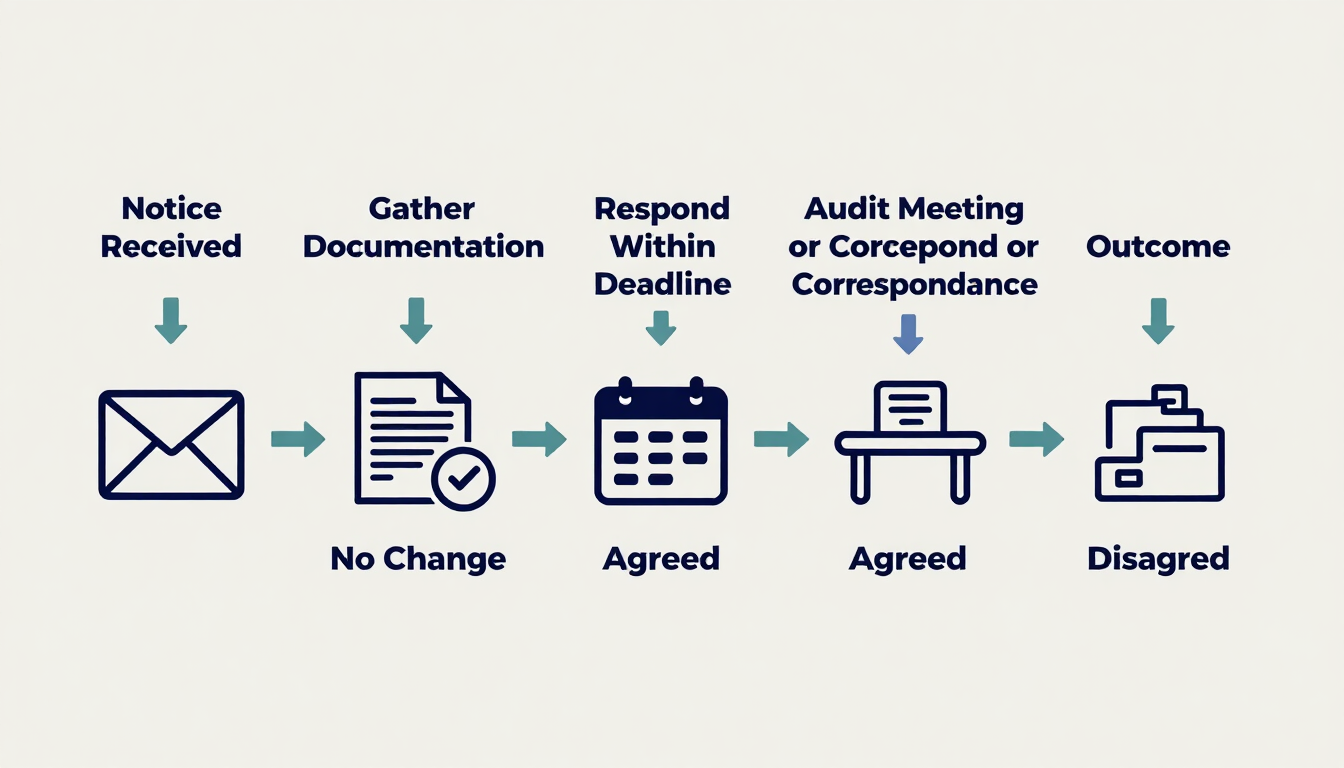
Most audits follow a recognizable sequence:
- The initial notice. It identifies the tax year, the items under review, and a response deadline. Reading it closely is the most important first step.
- Documentation gathering. Receipts, bank statements, mileage logs, and contracts are collected to support what was reported.
- Responding on time. Requests must be answered within the stated deadlines. If more time is needed, an extension can often be requested, but it should be requested before the deadline passes.
- The meeting or correspondence. In a mail audit, responses go back and forth in writing. In office and field audits, the examiner asks questions in person.
In-person meetings call for particular care. The goal is to answer what is asked, accurately and directly, without volunteering unrelated information. Having a representative present, or attending in your place, helps keep the conversation focused on the items under review.
The Role of Your Representative
Once authorized, your representative communicates directly with the IRS on your behalf. In most cases, you do not need to speak with the IRS yourself.
That distance has practical value. A representative also:
- Reviews documentation before it goes in, so you share what is requested and nothing beyond it
- Checks the IRS's calculations and assumptions, and identifies errors in its methodology
- Tracks deadlines and keeps correspondence organized
- Explains findings in plain language, so you can make informed decisions
This combination of communication, review, and organization is what makes representation more than a formality. It gives the audit a steady, informed point of contact on your side.
Possible Audit Outcomes
An audit typically ends in one of three ways:
- No change. The IRS accepts the return as filed.
- Agreed. You accept the IRS's findings and any additional tax owed.
- Disagreed. You dispute the findings and move into the appeals process.
Agreeing is sometimes the sensible result, particularly when the IRS is correct. A representative's job is not to contest every point but to make sure any agreement is accurate and fair.
If an agreed result leaves you owing additional tax, that balance becomes a separate matter with its own payment options. Understanding the full amount, including any penalties and interest, before you sign is an important part of the decision.
Appealing an Audit Result
If you disagree, you can ask the IRS Office of Appeals, an independent unit that reviews the examiner's findings separately from the audit team.
The IRS usually communicates proposed changes by letter. A 30-day letter gives you a window to request an appeal. A 90-day letter, formally called a notice of deficiency, gives you a window to petition the U.S. Tax Court. Missing either deadline can limit your options, so these letters deserve immediate attention.
Tax Court is a last resort when Appeals does not resolve the dispute. It is an independent court that hears disagreements between taxpayers and the IRS.
Appeals is often a practical middle step. It gives both sides another opportunity to look at the facts and, in some cases, reach a resolution without going to court. A well-prepared record from the audit stage supports that review.
Business and Individual Audits
Individuals and business owners face similar audit mechanics, but businesses often encounter additional issues:
• Payroll tax audits, which can involve exposure to the Trust Fund Recovery Penalty, a penalty that can apply personally to people responsible for withholding and paying employee taxes
• S-corporation and partnership return audits, which review how income and expenses pass through to owners
• Employment classification audits, which examine whether workers are correctly treated as employees or independent contractors
These issues often involve several years of records, which makes organized documentation especially valuable.
What Audit Representation Does Not Include
- It does not include preparing the original return being audited. That is a separate engagement.
- It does not guarantee a specific outcome. The IRS makes the final determination.
- It does not eliminate a legitimate tax liability. Representation contests errors and works within IRS guidelines; it does not erase tax that is truly owed.
How Audit Representation Connects to Your Wider Tax Picture
Audit representation often overlaps with other tax work, such as bookkeeping, return preparation, and balance resolution. Understanding those links helps you see what an audit may affect beyond a single return.
An audit rarely exists in isolation. The records an examiner requests are the same records that good bookkeeping produces all year, so organized books make an audit far less disruptive.
Return preparation matters as well. Findings in one year can raise questions about neighboring years, and the way items were originally reported affects how easily they can be supported.
If an audit results in additional tax, the next question is how to pay it. Depending on the amount, the options may include a payment plan or, in some cases, a broader tax resolution strategy. Those are separate decisions with their own requirements.

Audits can also shape how you plan going forward. Learning which items drew attention helps you document more carefully and make better-informed choices on future returns.
Business owners may find the connections run deeper. Entity structure, payroll practices, and how owners are paid can all affect what an examiner reviews, so coordinated advice across these areas helps keep the picture consistent.
Seeing these connections keeps the audit in proportion. It is one event within a larger financial picture, and it can be handled alongside everything else.
Accuracy, Preparation, and Steady Communication
Audit outcomes depend on accuracy and preparation. A representative brings organized documentation, careful review, and consistent communication, so the IRS receives clear answers and you stay informed.
Audits reward precision. A missing page, an inconsistent figure, or an unclear explanation can create extra questions, while complete and consistent records tend to narrow them.
Three habits matter most:
- Verification. Every figure is checked against source records before anything is submitted.
- Consistency. Explanations match the documents, and the documents match the return.
- Timeliness. Deadlines are tracked from the first notice to the final response.
At RQ Tax Resolution, the approach is to explain each step in plain terms, prepare documentation carefully, and keep you informed about what the IRS has asked and where the audit stands.
Dependable guidance also means honest guidance. If an item cannot be supported, you should hear that early, so decisions are made with a clear view of the facts.
That steadiness is often what makes an audit feel manageable. You know what is being asked, who is responding, and what comes next.
Confidentiality and care with your information also matter. Sharing only what is requested, and keeping records organized and secure, protects you throughout the process.
Frequently Asked Questions
What is IRS audit representation?
It is when a qualified professional, such as an Enrolled Agent, CPA, or tax attorney, represents you before the IRS during an audit. They communicate with the IRS, review your documents, and handle the process on your behalf.
Do I have to talk to the IRS myself during an audit?
In most cases, no. Once your representative is authorized, they can communicate with the IRS for you. This also helps keep you from sharing more than was requested.
Who can represent me in an IRS audit?
Enrolled Agents, CPAs, and tax attorneys can all represent taxpayers before the IRS. It does not have to be the person who prepared your return.
What happens if I ignore an IRS audit notice?
The IRS may adjust your return using only the information it has, which can lead to additional tax, penalties, and interest. Responding by the stated deadline keeps your options open.
What documents do I need for an IRS audit?
It depends on the items under review, but commonly includes receipts, bank statements, mileage logs, and contracts. The notice itself lists what the IRS wants to verify.
What happens if I disagree with the audit results?
You can request a review by the IRS Office of Appeals, and if that does not resolve the dispute, you may take it to Tax Court. The deadlines in the 30-day and 90-day letters apply, so acting promptly matters.
How long does an IRS audit take?
Timelines vary with the audit type and how quickly records are provided. A narrow mail audit often moves faster than an office or field audit, but no single timeline fits every case.

Get Started Today
If you have received an IRS notice and want help understanding what it asks of you, you are welcome to reach out to RQ Tax Resolution at (619) 937-3322 or through the form on this page.
Talking through the notice and your records is a simple way to gain clarity on your next steps.